
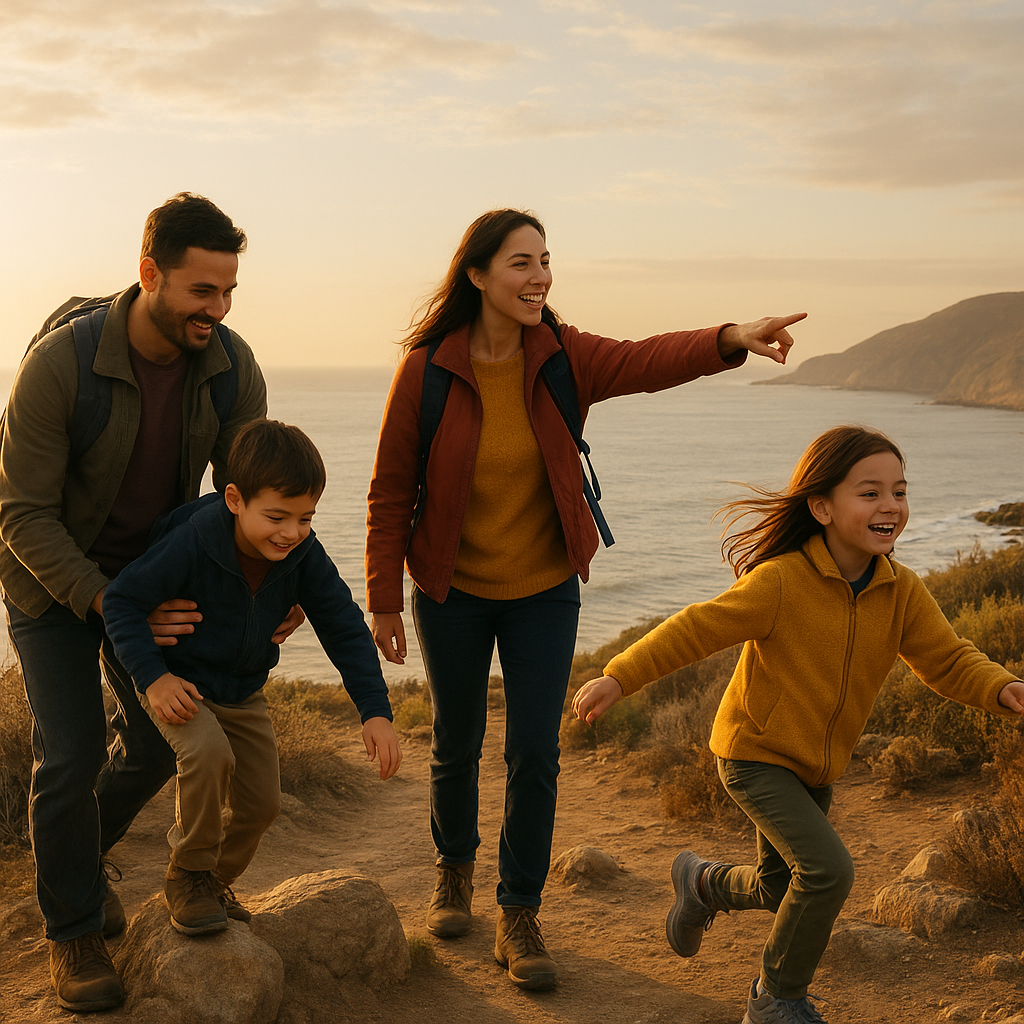
Why Adding an Adventure Day is the Secret to a Better Family Holiday
Most families come home from holiday feeling vaguely disappointed without knowing why. They did everything right – the pool, the beach, the dinners. But something felt flat. The answer, more often than not, is that they never actually did anything together.
The unfamiliarity, mild stress, and start-to-finish nature of a one-day adventure raise adrenaline and oxytocin, which look a lot like novelty and connection. Basically the brain sees meeting unfamiliar challenges with loved ones as if it were exploring a new relationship or falling in love. And that feels pretty good.
The problem with pure relaxation
There is a psychological concept known as the peak-end rule: People remember an experience based on its emotional peak and how it ended – not the average of every moment. A two-week holiday spent entirely at a resort will, in memory, collapse into a blur. The days that stand out are the ones where something actually happened.
Pure idleness also has a fatigue curve most families don’t anticipate. By day four or five of a resort-style trip, the rhythm becomes predictable. Breakfast, sun lounger, pool, dinner. Children start reaching for their phones. Parents start managing logistics instead of participating in the holiday. The mid-trip slump is real, and it’s not fixed by a nicer cocktail menu.
An adventure day acts as a circuit breaker. It interrupts the pattern before the pattern becomes the whole memory of the trip.
What a day on the water does that a beach day doesn’t
Coastal destinations offer one of the cleanest examples of this. A beach day is passive. A day on the water with a purpose – navigation, fishing, wildlife spotting – requires active communication. Family members have to pay attention to each other. Children can’t opt out. Grandparents who wouldn’t manage a hike can often participate at their own pace.
Booking Quepos fishing charters is a good example of how a single well-chosen activity can deliver multiple things at once: the physical engagement of deep-sea fishing, direct exposure to marine biodiversity that’s invisible from the shoreline, and the structure of a guided expedition where someone else is managing the day’s logistics. That last part matters more than most parents expect.
Why active experiences are actually more restful
It may not seem like it, but research supports the idea that meaningful work can provide better mental relaxation than easy activities. For instance, sitting motionless in a comfortable chair could even make you feel worse. Your brain will still be thinking about work, emails, and other stresses. On the other hand, when your brain is focused on reading a river for trout, following a hiking guide through unfamiliar land, or learning how to tie a new fly, it’s engaged in something new. This breaks the cycle by teaching the brain to sit still.
According to the Family Travel Association Annual Survey, 85 percent of parents say that the primary reason they take a family vacation is so their kids can see and do new things. However, most family vacations don’t cater to this priority. A day in the outdoors can give you exactly what you’re looking for, as well as the additional bonus of knowing that everything you’re doing and seeing is new to you. When you’re done with the day’s adventure, you’ll appreciate and enjoy your leisure time even more!
The quiet gift of handing over the planning
Decision fatigue can be a real energy drain during a family holiday. One parent’s often the one who’s also wrangled the flights and the hotel, sorting every meal, every outing, every transition. Coordinating, not participating.
A pro local guide or charter operator takes all that off the table for a day. The parent who’s been running point suddenly has nothing to organize. They can just be there – which is, ironically, harder to do than most people think, and infinitely more rewarding than a week of lying by the pool.
It’s also where sustainable tourism is just good travel. Engaging local experts intimately connected to their patch leads to a better experience for your family and community benefits at the destination.
The story the family tells afterwards
For sure, an afternoon on a boat will prove more memorable than an afternoon in a deckchair! But the shared adventure makes for a scene everyone will look back on together.
Skill-based activities also give children something they can genuinely own. Knowing how to read a fishing line, identify a bird species, or follow a guide’s instructions in an unfamiliar environment builds a kind of physical confidence that no resort amenity provides.
A family holiday should produce more than photographs. The best ones produce a few moments that genuinely shift how a family sees itself – what it can do together, what it’s willing to try. One adventure day, built into an otherwise relaxed itinerary, is usually enough to make that happen.